How the
Curve vase is produced
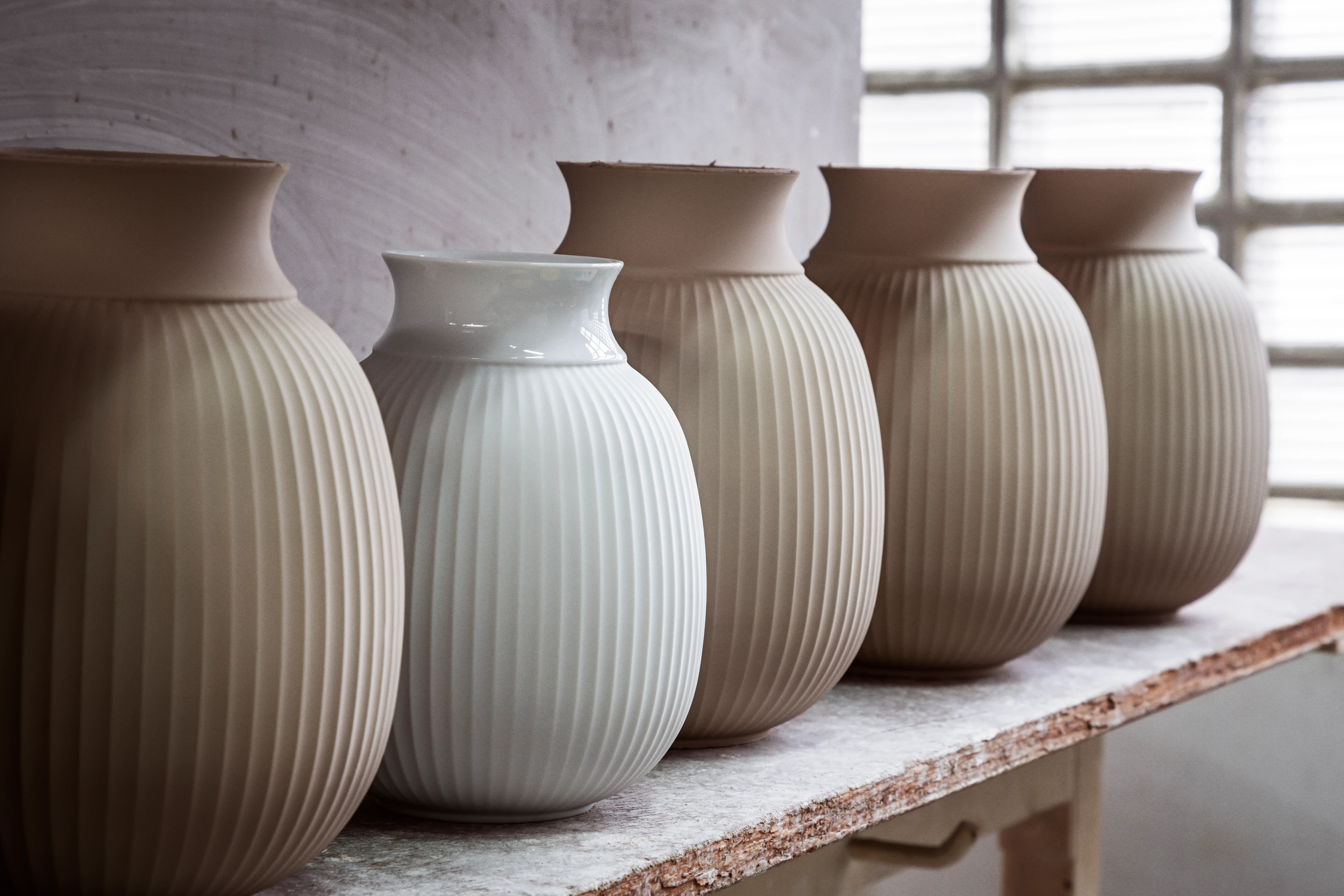
Each Curve vase passes through the hands of many skilled people. Come behind the scenes of the porcelain manufacturer and see how the vases are made. Curve is a new classic with classic grooves, curved silhouette and contrasting matte and glazed surfaces.
Curve porcelain vase
- a new classic is born
From process to perfect finish
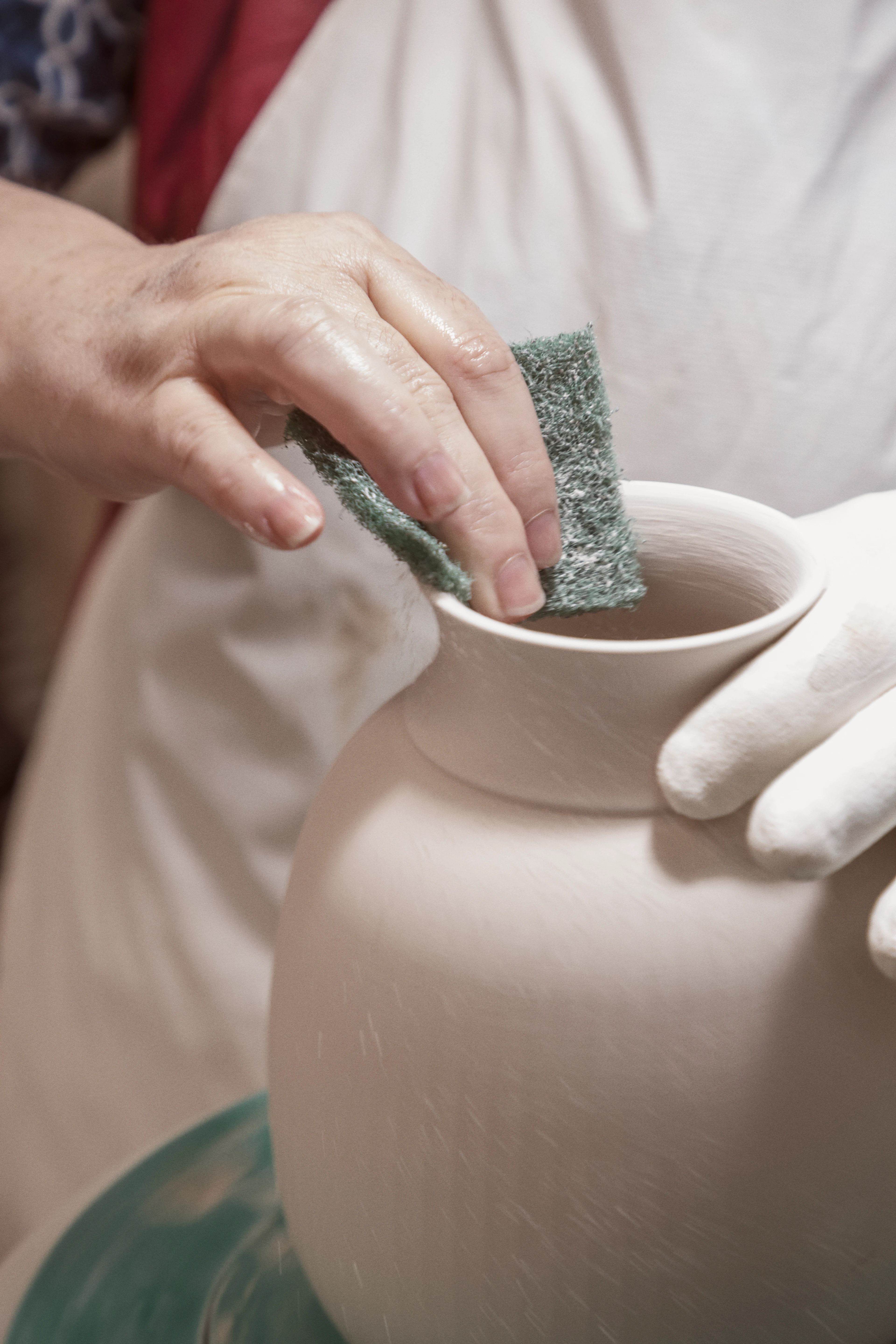
Before the vase is fired for the first time, it is carefully inspected for marks from the mould’s joints and clay remnants, which are removed with a soft sponge. Non-glazed, matt porcelain, which makes up a considerable part of Curve, reveals any unevenness that may arise during the casting process. Strict requirements are therefore in place for both the precision in craftsmanship and the unique moulds that have been created for this particular design. The raw vases have to rest for 48 hours to avoid cracking when placed in the 980°C oven for ten hours.
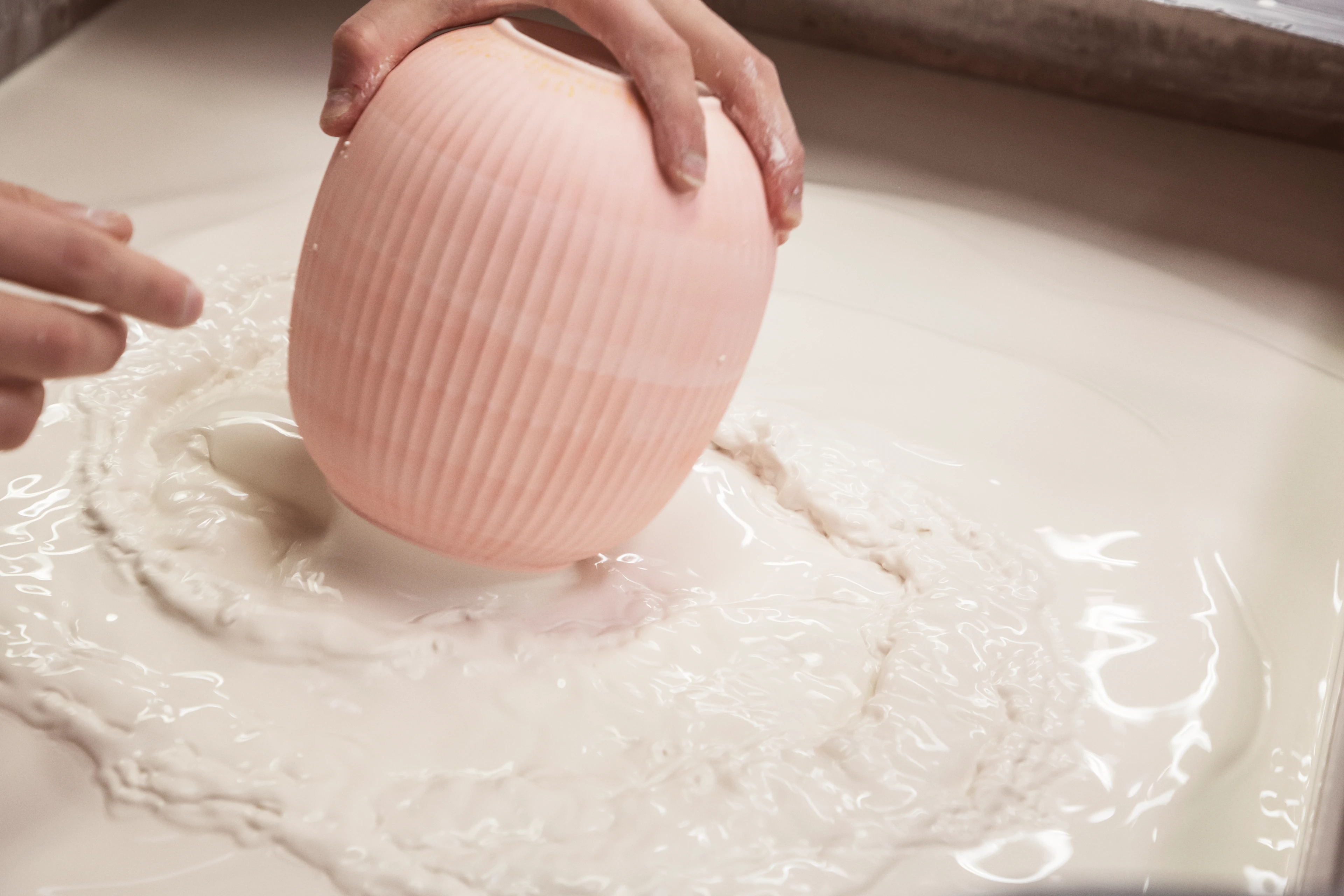
Quality requires time and care
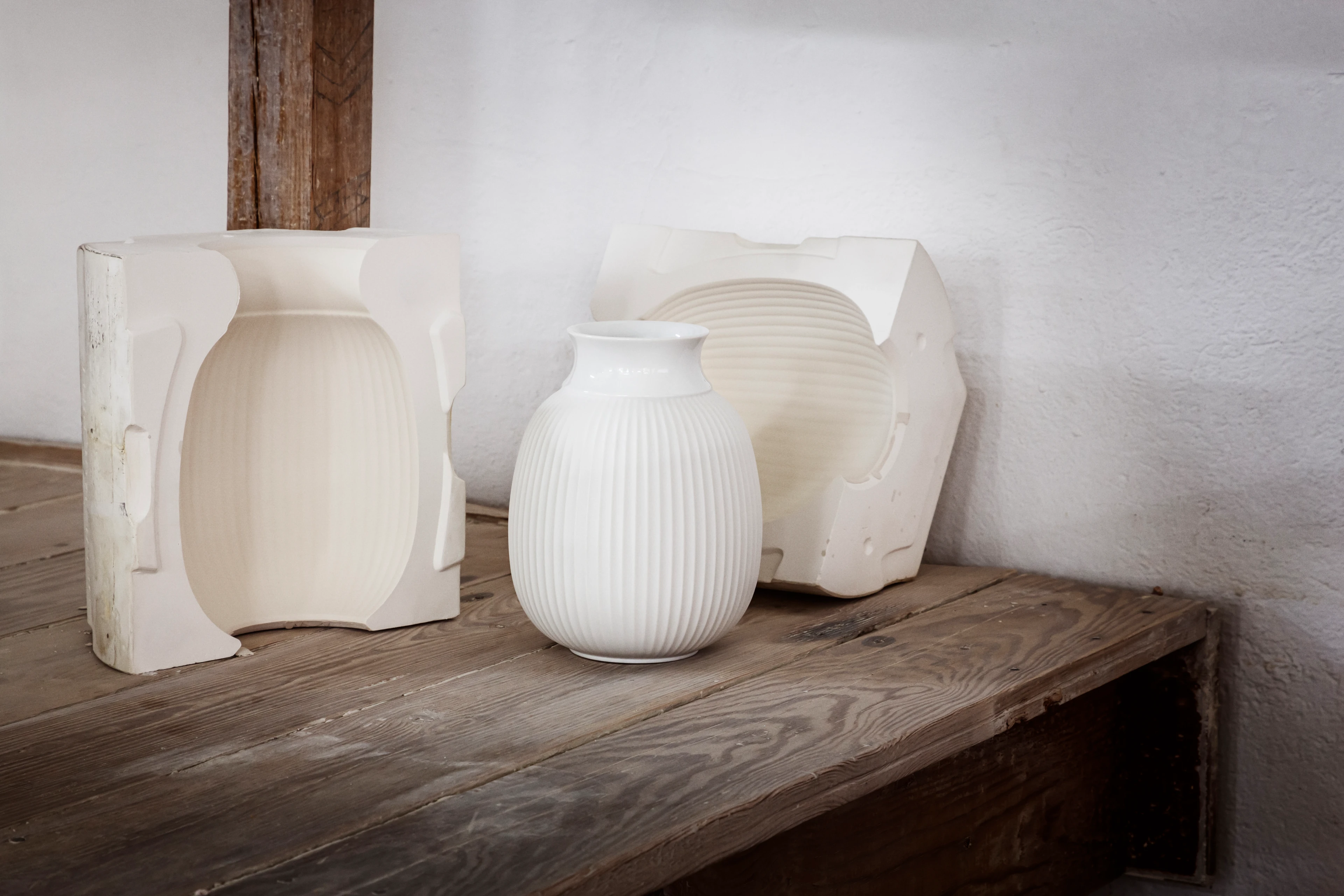
Vases with and without glaze
The finishing touches
Before the vases are ready to be sent out to find their right shelf, the porcelain is inspected and the vase is sanded with a soft brush to remove any small irregularities. Every single Curve porcelain vase is then subjected to another quality control, for a final check with hands and eyes before the vase is packed in a box.
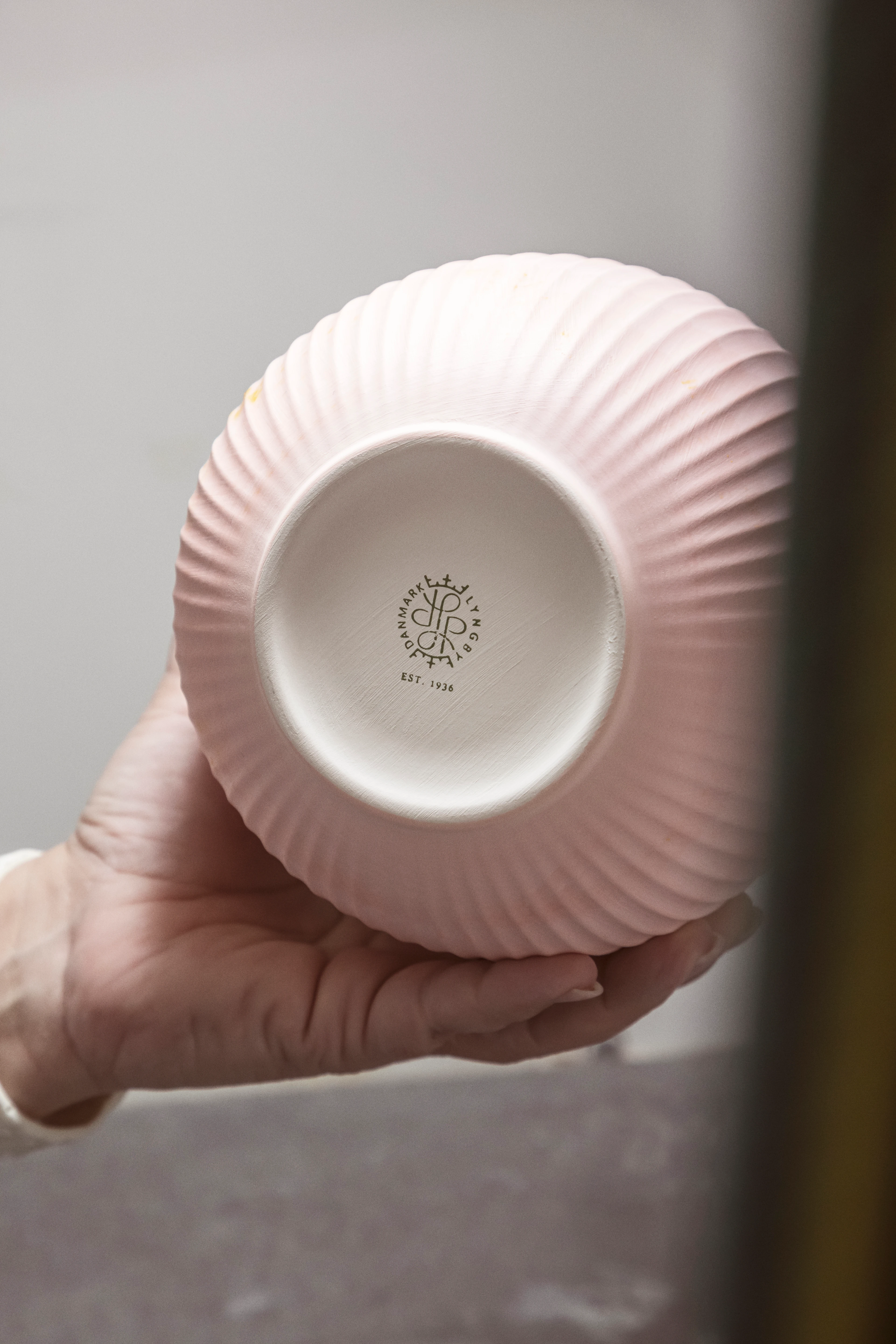
The Curve vase in facts and figures
About 270 vases of 17 cm are produced every day
... and about 170 vases of 12 cm every day
The vases are fired in two stages
– first at 980°C and the second time at approx. 1400°C
Explore Lyngby Porcelæn’s design universe
See all StoriesDelivery within 2–5 business days
Free shipping on orders from € 89
30-day
return policyGet your gifts beautifully wrapped
We preserve and develop Danish design icons so that both present and future products can be part of the brands that have helped create our Danish design culture.